Dating apps for rural areas: how to pick one that works where you live

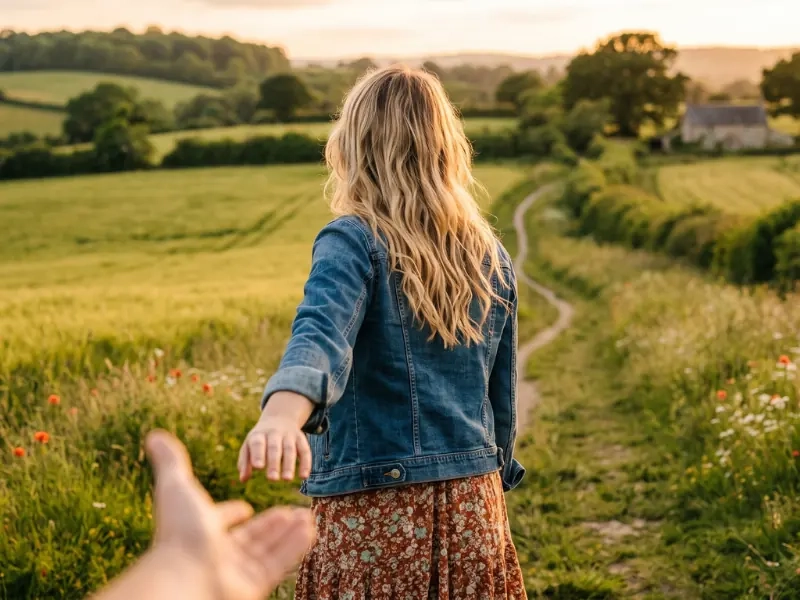
A woman walking ahead up a path through a wheat field, reaching back to take a hand

Almost every mainstream dating app is designed around a dense town, so the thing to check is not which app is best. It is which one still works when there are 40 people per square mile.

There is no single best dating app for rural areas, and anyone who gives you a straight ranking is guessing or getting paid. What there is, is a short list of things that decide whether an app will work where you live. Check these seven and you can judge any app yourself, including ours.

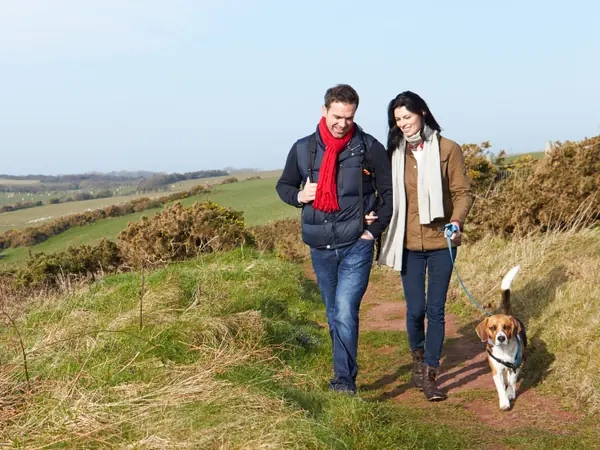
A couple walking a beagle along a grassy coastal path in bright weather

1How far the search radius will go

This is the single biggest factor and most people never touch it. An app that caps distance at 25 miles is useless in Powys, Cumbria, Argyll, Kerry or most of Lincolnshire. An app that goes to 100 miles gives you a real pool.

Before you pay for anything, set the distance as wide as it goes and see how many profiles come back. If the answer is still under fifty, the app is not built for where you live.

2Whether the members are actually near you

A big national user count tells you nothing. What matters is how those users are spread. An app with two million members who are almost all in London, Manchester and Birmingham is a smaller app than a 40,000 member site with people in every county.

Look for a published county or region breakdown. Most apps will not give you one, which is itself worth noticing.

A woman leaning on a rail inside a long barn, smiling

3Whether you can search, or only wait to be shown people

Swipe-based apps show you a queue chosen for you. That works in a city where the queue never runs out. Rurally you go through everyone in about twenty minutes and then you are stuck.

Search and browse is the better model in a thin area, because you can go and look rather than waiting for the app to decide. Check you can filter by distance, age and interest, and then actually browse the results.

4Whether it knows anything about your life

A general app has no idea that March is lambing, that you cannot get out before seven, or that a 40 mile drive is normal for you. So you spend the first three conversations explaining it, every time.

A countryside or interest based site does that filtering before you say a word. That is the real argument for a niche site, and it is a bigger one than the size of the member list.

5What you can do before you pay

Never pay for a dating app before you have seen who is on it near you. Any site worth using lets you register free, set your distance and browse real profiles in your area first.

If you have to pay to find out whether anyone is within an hour of you, that tells you what the answer probably is.

A couple standing by a farm gate with a Land Rover and a barn behind them

6How the safety side actually works

Check three things: whether photos are checked before they appear, whether there is a way to report someone that goes to a person, and whether blocking is genuinely one tap.

Ask one more question that most people skip. Does the site do anything when a member is pushed to move onto WhatsApp early? That is one of the most common opening moves in a scam, and a site that watches for it is doing something real.

7Whether the newest features reach you at all

This one is easy to miss. Several of the big apps have moved towards organised in person events as their headline feature, and those roll out city by city. Tinder has said it is going from 10 cities to 75 by the end of 2026.

Seventy five cities is a lot of cities. It is not a lot of countryside. If an app is putting its best work into city events, it is telling you where it thinks its members are.

What the mainstream apps are actually good at

It would be daft to pretend otherwise, so here it is plainly. If you live within half an hour of a decent sized city, the big apps have more people than any niche site can offer, and that matters. Hinge in particular has grown while others have shrunk, and it is built around intent rather than volume.

The trade is coverage against fit. A general app gives you more people and less in common. A countryside site gives you fewer people and a much higher chance that the ones you find already understand the drive, the hours and the dog.

Even Match, which runs on search rather than swiping, tells its own users that filters can get "so precise there is nobody in the area who meets all your requirements" and advises widening the radius. That is a fair description of the rural problem from a mainstream site, in their own words.

Where Grounded sits

We are the smaller kind. Around 38,000 members across our markets, 21,500 of them in the UK, spread across 71 UK counties and 13 Irish ones. You can register free, set your distance as wide as you like and browse everyone in range before you pay for anything.

That is not the biggest number on this page and we are not going to pretend it is. It is a number spread across the countryside rather than stacked in four cities, which is the number that matters when you live where you live.

We have written longer pieces on how we compare with Tinder, Bumble, Hinge and Match if you want the detail.

dating apps rural dating comparison
Common questions

Things people ask about this

What is the best dating app for rural areas?

There is no single best one. The apps that work rurally share four traits. A search radius that goes past 50 miles. Members spread across counties rather than concentrated in cities. The ability to browse rather than only being shown a queue. And free registration, so you can check the pool before you pay.

Are dating apps for country people worth it?

They are worth it when the alternative is explaining your working week to every new match. A countryside site is smaller than a mainstream app but the people on it already understand the hours and the distances, which is where most of the friction actually sits.

How many people should I expect to see in a rural postcode?

It depends entirely on your radius. At 15 miles most rural users see a handful. At 50 miles the same postcode usually reaches several hundred. Change the distance before you judge any app.

Is a smaller dating site a worse dating site?

Not if the members are where you are. A large app with users concentrated in a few cities can return fewer usable results in a rural postcode than a smaller site spread evenly across the counties.

Read next

More on this

The comparisons in full, plus what we charge and who is on the site.

A couple in a cottage garden, one crouching by a rose bush and one standing talking

Check the pool before you pay anything

Register free, set your distance and see who is in range.

Sign up free